REVIEW · CHANIA
Rethymnon Olive Tree Sponsorship Protect and Plant Tour
Book on Viator →Operated by Cretan Aenaon · Bookable on Viator
Old olive trees deserve more than a photo.
This Rethymnon experience takes you from town to an olive grove where your sponsorship becomes a real, living presence. You’ll attach a name tag, share a toast at the tree, and (if you choose) plant an olive cutting tied to the Cretan Lazarus project and its work preserving threatened varieties.
I especially like the hands-on vibe: you’re not just buying a certificate, you’re seeing the tree itself and adding your name tag on site. I also like that the tour includes a photo-and-video moment, plus your tour team creates photos and video for you, so you leave with memories that feel tied to the grove.
One thing to think about: the experience requires good weather, and it runs a tight 2.5 hours. If you’re the type who wants a long, slow outing, this may feel brief, but it’s well-paced for what you get.
In This Review
- Key highlights at a glance
- Tree sponsorship that actually happens in the grove
- Where you start: Dimitrakaki in Rethimno and a mobile-friendly meet-up
- The drive to the olive grove: part transport, part transition
- Arriving at your tree: name tags, photos, and a toast
- A small detail that can matter: plaque names in advance
- Choosing sponsorship vs planting: what changes on the day
- What the Cretan Lazarus project means for your tree
- If you plant: the cuttings, the grove, and why it matters
- Your sponsorship package: what you gain beyond the day
- Price and value: why $141.78 can make sense
- Timing and operating window: plan around the grove and weather
- Who should book this tree sponsorship tour?
- Practical tips before you go
- Should you book the Rethymnon Olive Tree Sponsorship Protect and Plant Tour?
- FAQ
- What is the duration of the tour?
- Where is the meeting point?
- Is the tour private?
- What language is the tour offered in?
- Do I need to provide a name for the tree plaque?
- Can I plant an olive tree instead of only sponsoring one?
- Is weather important for this experience?
Key highlights at a glance
- Attach your name tag directly to the sponsorship tree in the olive grove
- Toasting moment at the tree, tied to your chosen sponsorship
- Guided Cretan Lazarus work using cuttings from old monumental trees and threatened varieties
- Photos and video included, plus you can record your own at the tree
- Optional planting if you’d rather plant an olive tree than only sponsor
Tree sponsorship that actually happens in the grove
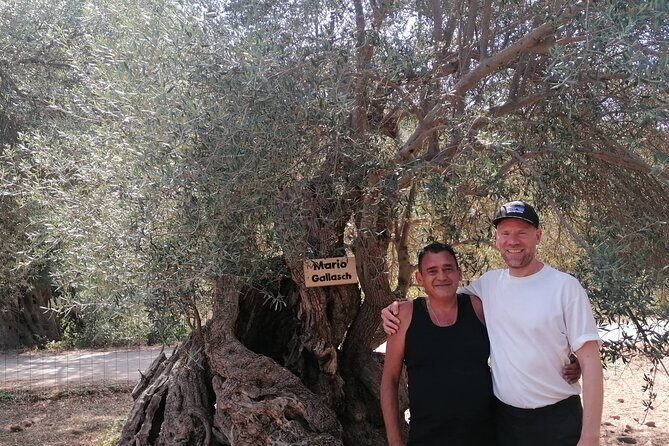
This is the kind of tour that turns a good idea into a concrete action. You don’t just receive a sponsorship concept. You get driven to an olive grove, you meet the tree, and you place your name tag on it. That single moment makes it feel personal in a way that’s hard to replicate with paperwork.
The other big reason this works is the project connection. The Cretan Lazarus project isn’t described as a generic “plant a tree” effort. It focuses on pulling new cuttings from the gene pool of old monumental olive trees, and also from varieties threatened with extinction. That means your sponsorship (or planting, if you choose that option) is framed as conservation work, not only feel-good tourism.
And yes, there’s a social ritual built in: you toast together at the tree. It’s a small thing, but it changes the mood from quick tourism to a shared moment you’ll remember.
Other Rethymno tours we've reviewed in Chania

Where you start: Dimitrakaki in Rethimno and a mobile-friendly meet-up
You meet at the agreed meeting point, and the tour notes that it’s important to be mobile. If you have mobility limits, the team can arrange a meeting point so they can take you with them—so don’t assume you’re out of luck. It’s also a private activity, meaning only your group participates, not a big mixed crowd.
The start address listed is Dimitrakaki 2, Rethimno 741 32, Greece. The activity ends back at the meeting point, so you’re not dealing with a drop-off somewhere remote.
One practical detail I’d plan around: you’ll want to have your phone ready for the mobile ticket. The tour uses a mobile ticket, and confirmation is sent at booking time.
The drive to the olive grove: part transport, part transition
After you meet, you drive together to the olive grove. That shared drive matters more than it sounds. It keeps the group together, and it also gives the team a chance to set the tone before you reach the trees.
Even if your goal is simply the tree moment, the ride helps you shift from beach-and-bus-pace into something slower and more grounded. You’re moving from the busier town area into the space where the sponsorship actually lives.
Arriving at your tree: name tags, photos, and a toast
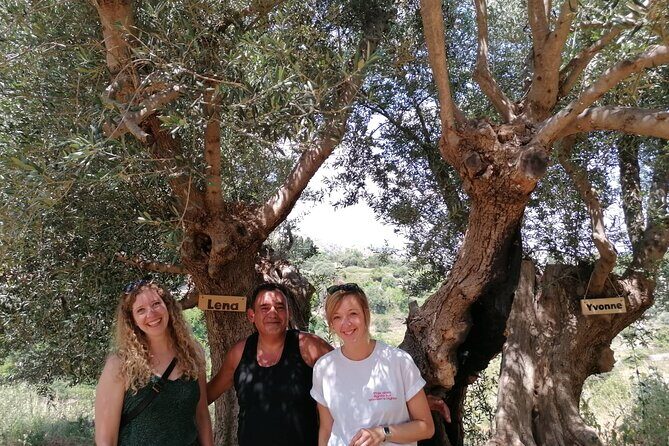
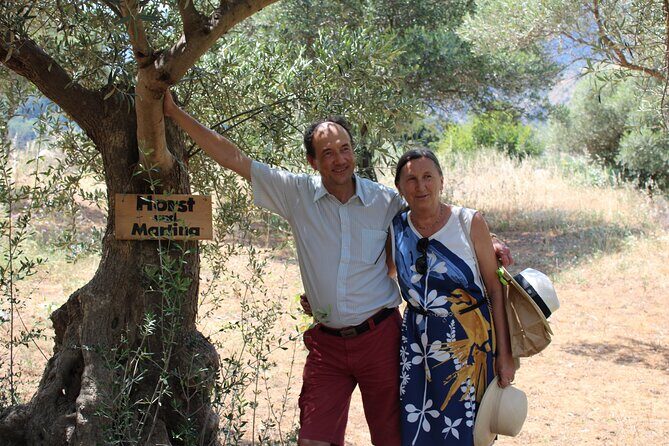
Once you reach the grove, you attach your name tag to your sponsorship tree. This is the core of the whole experience. It’s simple, but it’s also powerful because you’re physically making the link between your support and a specific tree.
Then you get time for photos—and you can also film your own video. On top of that, the team produces photos and videos. That combination is a smart value add. You’ll capture what you want with your phone, but you also get professional-looking images from the tour side.
After the photo time, you toast the sponsorship together at the sponsorship tree. If you’re the kind of person who enjoys ceremonial moments, this will land well. Even if you’re not, it still works as a gentle “now this is real” button for the experience.
A small detail that can matter: plaque names in advance
To place the name plaque, the tour requires the name(s) to be provided when booking. If you’re doing this as a gift—especially a wedding or anniversary surprise—double-check spelling before you finalize.
Choosing sponsorship vs planting: what changes on the day
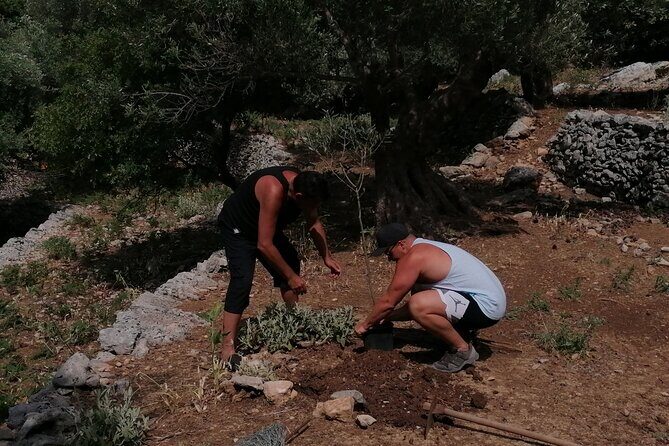
This tour has two ways to participate:
1) Sponsoring a tree
You attach your name tag to the sponsorship tree, toast together, and then receive your sponsorship package from the team (based on the chosen sponsorship). The tour describes that the sponsors receive their sponsorship package from the team depending on the sponsorship option.
2) Planting an olive tree
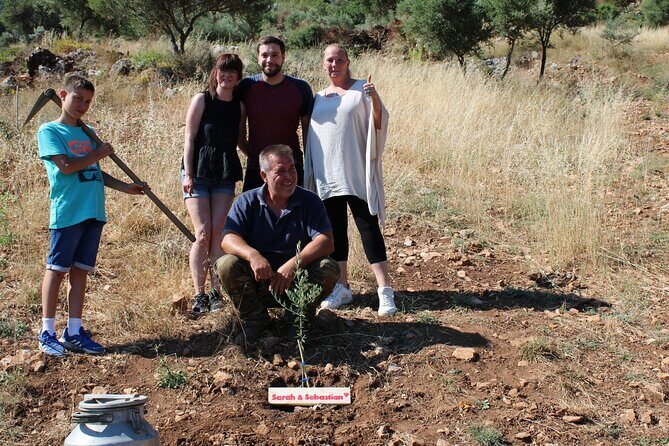
If you’d rather plant, the tour also offers planting an olive tree from the Cretan Lazarus project. Instead of just adding a name tag to an existing sponsored tree, you help put a new cutting into the grove.
That choice can affect how you think about value. If you want a more emotional moment with less hands-on work, sponsorship can feel perfect. If you want to do something you can point to as you leave—something you helped create—planting is the stronger fit.
What the Cretan Lazarus project means for your tree
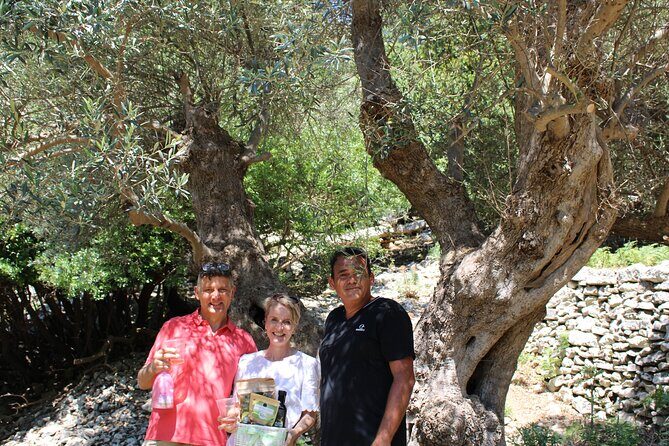
The Cretan Lazarus project is described with specific conservation logic. The tour explains that cuttings come from the gene pool of old monumental olive trees. It also notes that it uses varieties threatened with extinction.
There’s also a generational detail that’s worth understanding. The tour states that all newly planted olive trees today are grown in such a way that these trees are only 2 generations old at most. For conservation-minded travelers, that helps explain why the project is framed as protecting genetic lines rather than starting generic new plants.
So what does that mean for you? It means your sponsorship or planting is presented as supporting preservation of olive biodiversity—especially through careful propagation from meaningful source trees. If you care about climate and long-term nature protection, this is the part of the day that gives the experience real context.
If you plant: the cuttings, the grove, and why it matters
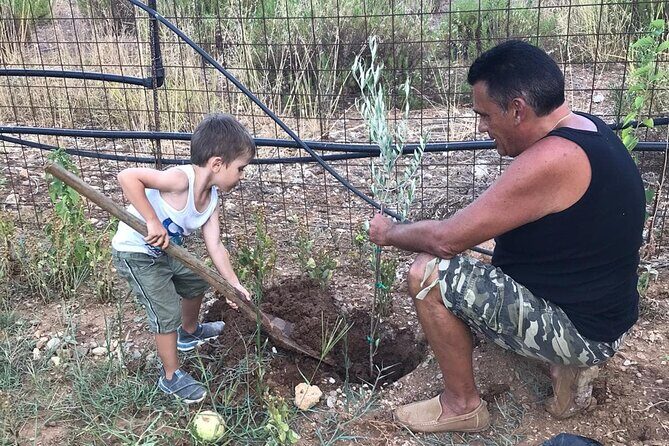
If you choose the planting option, you’ll plant an olive tree cutting from the project while you’re together in the grove.
The key idea here is that you’re not just “adding a tree.” You’re planting a cutting linked to a gene pool from old monumental trees, and also from varieties that face survival pressure. Combined with the note that newly planted trees are only 2 generations old at most, the project is aiming to keep a closer connection to the original lines.
It’s also the option that fits certain traveler personalities best. If you enjoy tangible, hands-on actions—work you can feel like a contribution—planting will make the day feel heavier in the best way.
Your sponsorship package: what you gain beyond the day
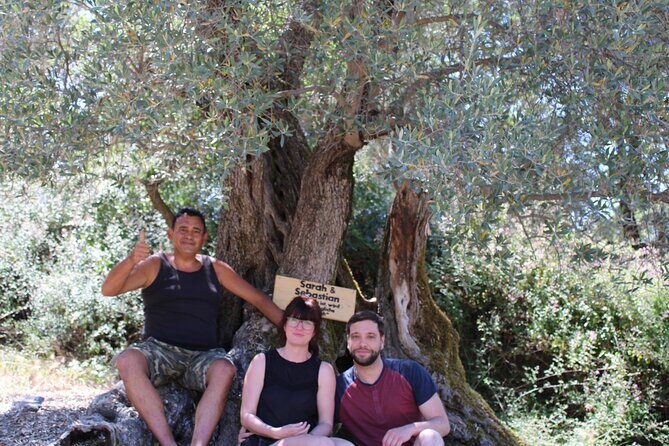
The tour says that depending on your chosen sponsorship, you and other sponsors receive a sponsorship package from the team.
The details of what’s inside aren’t listed here, but the important point for your planning is this: the experience isn’t only a 2.5-hour on-site moment. There’s a follow-through connected to your sponsorship level.
If you’re buying this for someone else, that follow-through is part of the gift value. You’re giving them an experience, but you’re also supporting a longer arc—something that continues after the toast.
Price and value: why $141.78 can make sense
At $141.78 per person for about 2 hours 30 minutes (approx.), you’re paying for more than a visit.
You’re paying for:
- transport to and from the grove as part of the experience
- a guided moment at the tree where you physically add your name tag
- time for photos and video (including photos/videos created by the team)
- a toast as part of the experience structure
- and, depending on sponsorship choice, follow-on sponsorship package delivery
- plus the conservation context tied to the Cretan Lazarus project, including details about source trees and propagation approach
In plain terms: the value comes from turning a sponsorship into a guided, recorded, personal event at the actual grove. If you were to do it on your own, you could probably visit olive groves. But you likely wouldn’t recreate the name-tag ritual, the guided connection to the project’s specific propagation story, or the built-in photo/video and toast.
That said, it’s not a full-day excursion. If you’re looking for a long sightseeing program, this may not feel like a best match. Think of it as a focused, meaningful block of time.
Timing and operating window: plan around the grove and weather
The tour runs within the listed opening hours: Monday through Sunday from 9:00 AM to 6:00 PM, and the activity window is listed from 06/26/2022 to 12/08/2026.
Confirmation is received at booking time, so you’ll know exactly when you’re scheduled. The tour also requires good weather. If it’s canceled due to poor weather, you’ll be offered a different date or a full refund.
My practical suggestion: if you’re visiting in a season with changeable skies, keep this in mind when you schedule around it. A short weather delay can disrupt other plans easily because the experience itself is just about 2.5 hours.
Who should book this tree sponsorship tour?
This works especially well if you:
- want a nature-related experience with a clear action you can point to
- like meaningful gifts (weddings, anniversaries, or love-themed surprises)
- care about conservation and want specifics about how olive varieties are being preserved
- prefer a private, group-only format
- enjoy photo moments but also want the team to handle some of the recording
It may be less ideal if you:
- want a heavily sightseeing-driven day with lots of stops
- dislike outdoor time in a grove setting
- need a strictly fixed schedule that can’t handle the possibility of a weather-based change
Also, the tour notes that service animals are allowed, and it’s near public transportation. That helps if you’re balancing other parts of your day.
Practical tips before you go
A few things to do so the experience goes smoothly:
- Bring a charged phone for your mobile ticket.
- Have the correct name(s) ready for your plaque.
- Wear shoes you can walk in outdoors.
- Plan to meet on time at Dimitrakaki 2 in Rethimno, unless you request an alternative meet-up point due to mobility needs.
Since it’s offered in English, you can expect the tour to be guided in a language most visitors from English-speaking countries can follow easily.
Should you book the Rethymnon Olive Tree Sponsorship Protect and Plant Tour?
I’d book it if you want your money to do something concrete, with a real olive grove moment and a direct tie to conservation work. The name-tag-and-toast format makes it feel personal, and the Cretan Lazarus details about source trees, threatened varieties, and the 2-generation growth approach give the day real meaning beyond a souvenir.
I’d skip it only if you’re hunting for a long multi-stop sightseeing route or you dislike weather-dependent plans. Otherwise, it’s a strong value for people who want an authentic, hands-on conservation experience in Crete without turning it into a complicated project.
If you’re considering it as a gift, this is the kind of experience that can create a story people still talk about later.
FAQ
What is the duration of the tour?
The tour is listed as approximately 2 hours 30 minutes.
Where is the meeting point?
The meeting point is listed as Dimitrakaki 2, Rethimno 741 32, Greece. The activity ends back at the meeting point.
Is the tour private?
Yes. It’s a private tour/activity, so only your group participates.
What language is the tour offered in?
The tour is offered in English.
Do I need to provide a name for the tree plaque?
Yes. You’ll need to provide the name(s) so the name plaque can be placed on the tree.
Can I plant an olive tree instead of only sponsoring one?
Yes. There is an option to plant an olive tree from the Cretan Lazarus project.
Is weather important for this experience?
Yes. The experience requires good weather. If it’s canceled due to poor weather, you’ll be offered a different date or a full refund.