REVIEW · CHANIA
Chania: Authentic Cooking Class
Book on GetYourGuide →Operated by Chania Cooking Class · Bookable on GetYourGuide
Chania’s olive-orchard kitchen lesson is seriously good. You get hands-on cooking with garden-picked ingredients and a wood-fired stone-oven lamb that cooks for over two hours, plus a real family vibe in Nerokourou. One catch to plan for: this is about a 10–15 minute drive from central Chania, and transportation isn’t included unless you arrange the extra-fee transfer.
I especially like the pacing: they prep the slow lamb first, then you roll and stuff while it cooks, so you never feel stuck waiting. The hosts, led by Veerna, teach skills like dolmades rolling and kalitsounia pastry work, then you sit down to the dishes you made with local wine and raki, plus dessert. My other caution: it’s alcohol-forward, so if you prefer to keep things light, go easy on the raki.
In This Review
- Key things that make this Cretan class worth your time
- Arriving in Nerokourou: the welcome that sets the tone
- The menu is pure Mediterranean basics, done Cretan-style
- The wood-fired oven lamb: why it takes time and how they explain the name
- Stuffed vegetables and dolmades: learning the “slow hands” skills
- Kalitsounia time: from dough to cheese and wild greens
- Tzatziki and dakos: appetizers that steal the show
- Eating Cretan style: wine, raki, dessert, and a table that feels like family
- Price and logistics: what $129 buys you, and what it doesn’t
- Accessibility, language, and group size: small details that matter
- Who should book this Cretan cooking class
- Should you book Chania Authentic Cooking Class
- FAQ
- What dishes are included in the class?
- How long is the Chania cooking class?
- Is the class taught in English?
- Is transportation included?
- Is there alcohol and are drinks included?
- Is the venue wheelchair accessible?
Key things that make this Cretan class worth your time
- Garden-to-plate produce: you pick herbs and veggies from the garden and use local farm ingredients.
- Thieves dinner, explained: oven-roasted lamb comes with the story and historic significance behind the name.
- Hands-on dolmades rolling: you learn a delicate technique and actually get it to the oven.
- Kalitsounia pastry practice: you work with dough, then fill pies with cheese and wild greens.
- Appetizers first, even if made last: tzatziki and dakos show up at the start of the tasting.
- A family setting with real warmth: familiar faces stop by, and the group atmosphere is part of the fun.
Arriving in Nerokourou: the welcome that sets the tone
This is one of those Chania experiences that starts the moment you get out of the car. The kitchen and outdoor setup sit in the neighborhood of Nerokourou, roughly 10–15 minutes from the center. If you’re driving, you’ll want to park along the fence near the property.
When you arrive, you’re greeted with a homemade refreshment or Greek coffee, plus cookies. It sounds small, but it matters because it gives you time to settle in, meet the people in your semi-private group, and get your bearings before you start cooking.
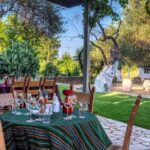
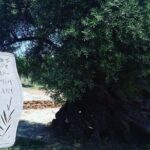
The setting is built for this kind of day: shade from avocado and olive trees, plus the sense that you’re in someone’s home and orchard, not a factory tour. One review even mentioned farm animals and puppies on the property, which fits the overall feel: rural, personal, and relaxed.
Other cooking classes in Chania
The menu is pure Mediterranean basics, done Cretan-style
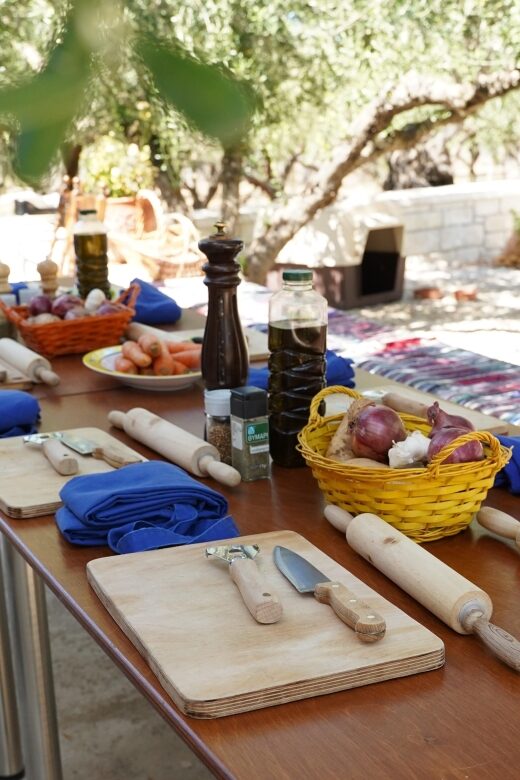
You’ll cook five essential items tied to the Mediterranean diet, and you’ll do it in a very practical order. The structure is smart: slower dishes go first, then you move into hands-on prep where you can keep your hands busy.
What you’ll make:
- Oven-roasted lamb, paired with the story of the thieves dinner
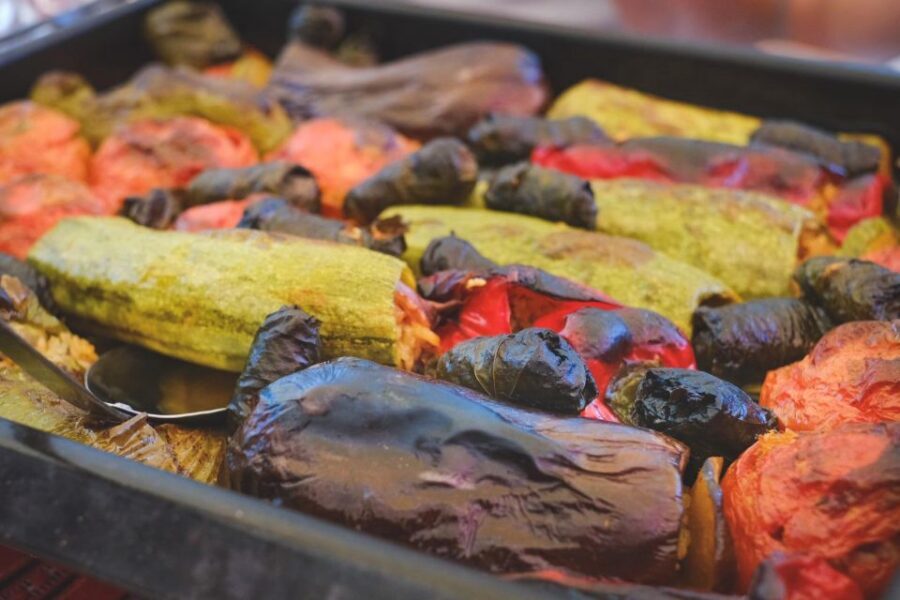
- Stuffed vegetables
- Stuffed grape leaves (dolmades)
- Kalitsounia (traditional pies with cheese and wild greens)
- Appetizers: tzatziki and dakos
And you’ll finish with dessert and plenty of local wine and raki.
Even if you’ve had Greek food in restaurants, the difference here is method. You’re not just eating. You’re learning why certain textures and timing matter—like rolling thin grape leaves properly, or how to get the pastry dough working before you fill and bake.
The wood-fired oven lamb: why it takes time and how they explain the name

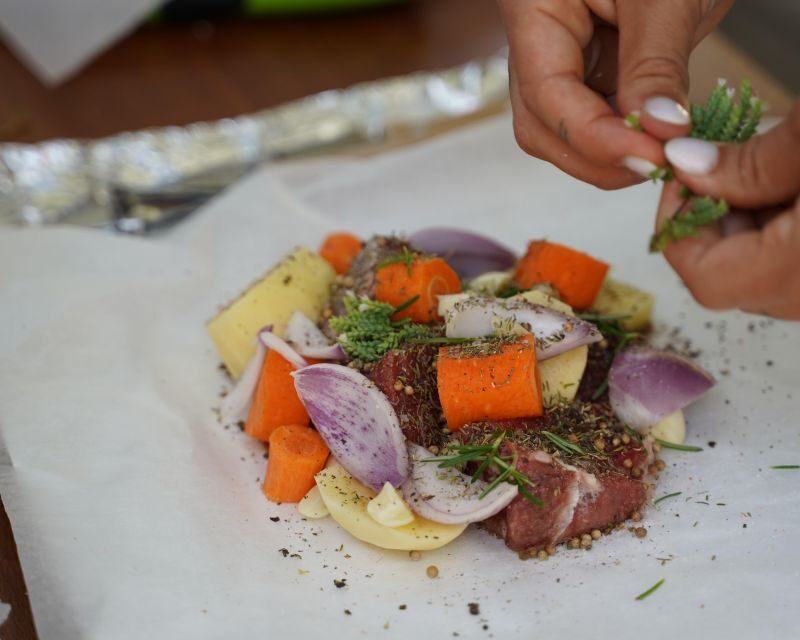
The first major dish is oven-roasted lamb, cooked in a wood-fired stone oven for more than two hours. They start it early on purpose. That means you get the lamb cooking while you jump into the other prep steps, so the afternoon stays active.
You’ll also get the cultural piece: they explain why this lamb dish is called thieves dinner and share its historic significance. I like that approach because it turns a roast into a story you can remember, not just a meal you forget five days later.
Practically, the oven is the showpiece. Wood-fired cooking gives you that deeper flavor you can smell as the day goes on. It also changes the texture of the meat, which is hard to replicate at home unless you understand the timing and don’t rush the cook.
Stuffed vegetables and dolmades: learning the “slow hands” skills
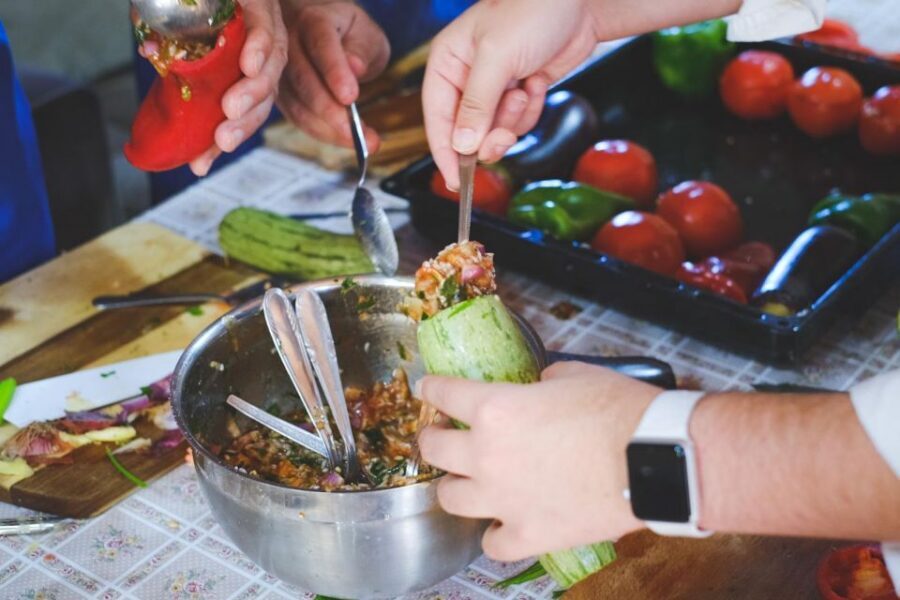
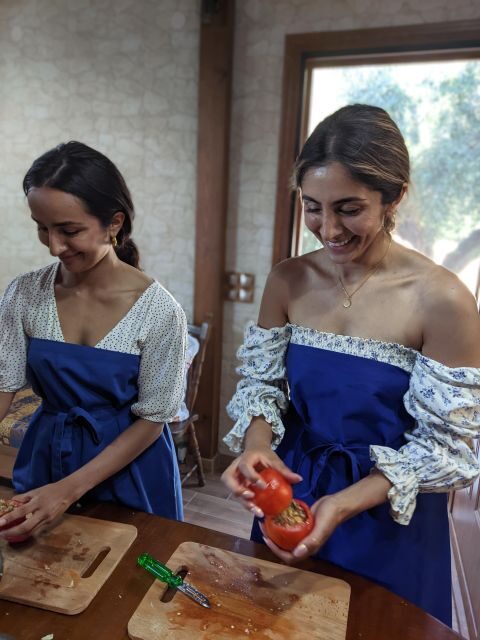
After the lamb starts, the class pivots into rolling, stuffing, and seasoning. You’ll gather herbs and veggies from the garden for the stuffing, which instantly makes the cooking feel local. It’s not just an ingredient list; it’s a little tour of what the kitchen uses.
Stuffed vegetables come first, then dolmades (stuffed grape leaves). Rolling grape leaves is delicate work, and that’s exactly where this class earns its keep. If you’ve struggled with dolmades before, you’ll appreciate getting a step-by-step feel and building confidence as you go.
You’re guided through the rolling technique, then the rolled dolmades go into the oven. From a value standpoint, this is a rare combination: you learn the skill and you leave with a finished dish you helped make—so the lesson isn’t abstract.
Kalitsounia time: from dough to cheese and wild greens
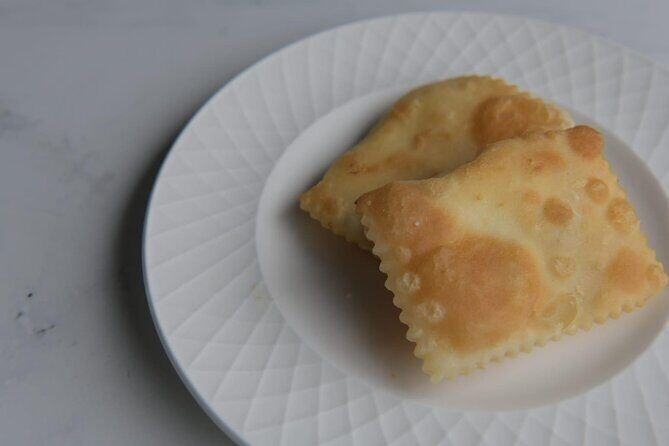
Next comes kalitsounia, the traditional pies where dough meets filling. You’ll roll out the dough and fill the pies with cheese and wild greens. The key here is that you practice with real dough, not just watch someone else do it.
That practice matters because these are the kinds of pastries where small moves change the final result. Roll too thick or too thin, and the texture changes. Fill too heavy, and it can leak. This is the part of the class where you can feel yourself learning, then producing.
A nice detail is the way wild greens fit into the Mediterranean flavor profile: earthy, savory, and a little tangy when paired with dairy. If you like food that tastes like it came from the region and not a packaged mix, this is a big win.



Tzatziki and dakos: appetizers that steal the show
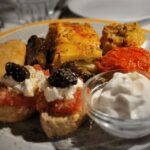
The class makes appetizers last but serves them first, so you get an early payoff while you keep cooking. Tzatziki is part of that lineup, along with dakos—another Cretan favorite.
You’ll learn how these simple dishes work and why they’re so satisfying. It’s the kind of food that’s easy to recreate at home once you know the basics, and that makes the class feel less like a one-off and more like a skill upgrade.
This is also where I like the group rhythm. Someone is rolling, someone is chopping herbs, and suddenly you’re all eating. The day doesn’t drag.
Eating Cretan style: wine, raki, dessert, and a table that feels like family
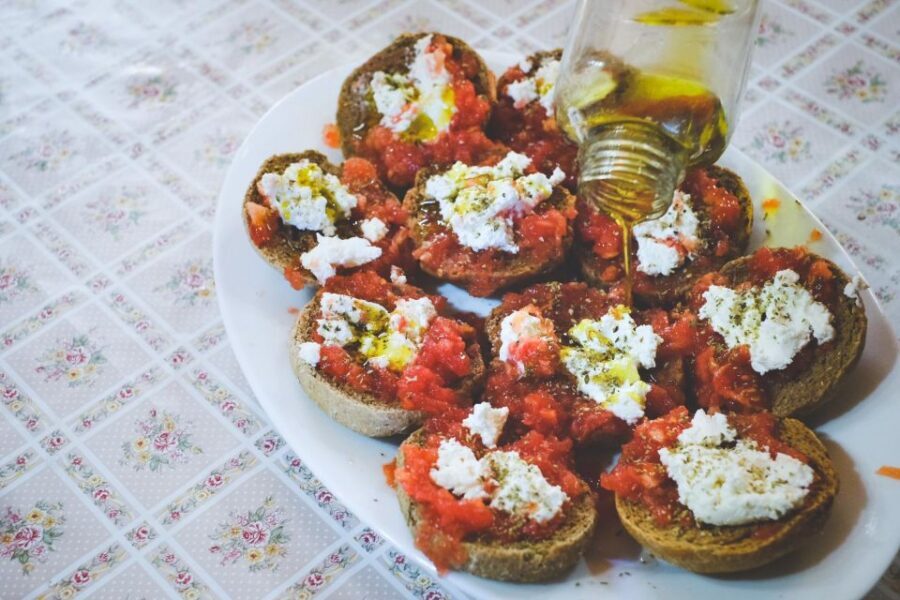
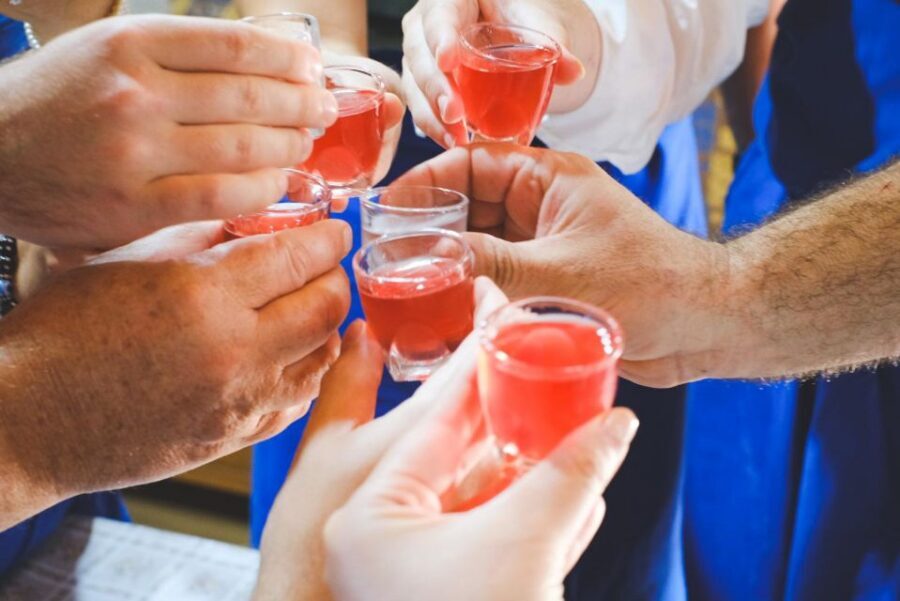
When the cooking wraps, you sit down to the full traditional Cretan meal you made. You get copious amounts of local wine and raki, and dessert is always part of the end.
That “always” matters because it turns the class into a true meal, not just a tasting. Some people in past classes also mentioned leaving with leftovers in to-go boxes, which is a practical bonus if you don’t want the evening to end with an empty stomach.
One more thing that adds to the atmosphere: the hosts run this like a family home. Familiar faces may stop by to greet the group, and the vibe can be playful and personal. I’ve also seen examples of them celebrating a birthday with cake and group singing, which tells you they pay attention to more than just food.
If you’re sensitive to alcohol, you’ll want to pace yourself. The wine and raki are part of the culture, but it can add up quickly in four hours.
Price and logistics: what $129 buys you, and what it doesn’t
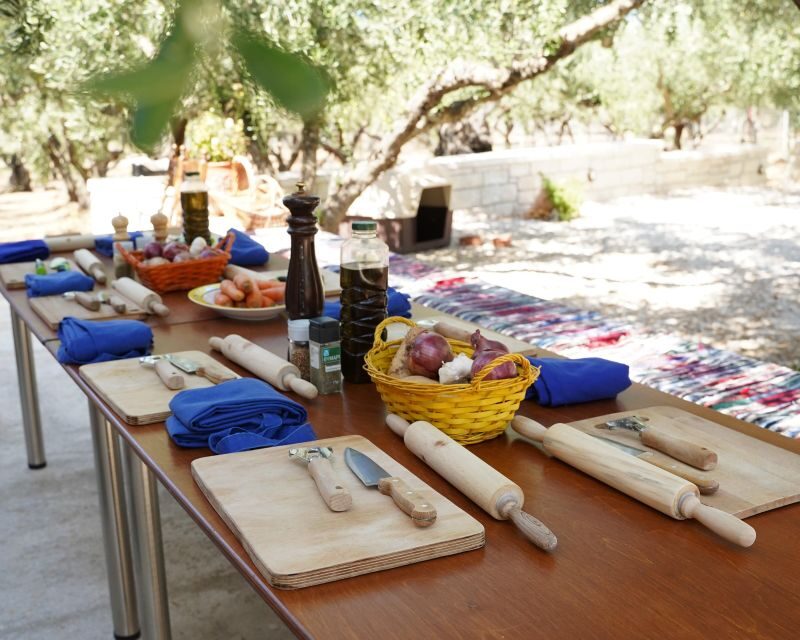
At $129 per person for about four hours, you’re paying for several things at once:
- hands-on cooking instruction for multiple dishes
- all ingredients
- your meal (lunch or dinner, depending on the session timing)
- generous wine and raki
- the wood-fired oven experience and garden prep
So the value isn’t just the food. It’s the combination of skill-building and the amount you actually eat.
What can change the math is getting there. Transportation is not included by default. The class is 10–15 minutes from the center of Chania in Nerokourou, and you’ll likely take a car or taxi to start. There is also transfer service available with an extra fee, and the transportation is described as semi-private, using a 9-seat van and a 5-seat EV. If you’re booking from farther out, ask for the transfer option in advance so you’re not figuring it out late.
Parking is along the fence, which is helpful if you’re driving.
Accessibility, language, and group size: small details that matter
The class is listed as wheelchair accessible. It’s in an outdoor-and-kitchen property setup, so it’s worth confirming the exact route if mobility needs are more complex, but the activity itself is described as accessible.
Instruction is in English, which helps a lot if you don’t speak Greek. And because the transport can be semi-private, you might be sharing the ride with other people joining the cooking class, so plan for a small mix rather than a purely one-on-one experience.
Who should book this Cretan cooking class
This is a great fit if:
- you want real cooking skills, not just eating
- you like Cretan food that centers on olive oil, herbs, vegetables, and slow-cooked meat
- you enjoy family-run experiences where the meal includes stories and hands-on teaching
- you’re happy to spend a full half-day on food and technique
It’s also a smart choice for first-timers. The lessons are structured so you can follow along even if it’s your first time making dolmades or working with pastry dough.
If you’re the type who hates being in a kitchen for hours, or you want a quick taste with minimal cooking, this may feel like too much. But if you like participating, it’s the right kind of effort.
Should you book Chania Authentic Cooking Class
If you like the idea of learning five classic dishes and then eating a full meal in an olive-and-avocado orchard setting, I’d book it. At $129, the value is strong because ingredients, instruction, meal, and drinks are all part of the experience, and you leave knowing how to make key parts of the menu at home.
Just make sure you plan your ride. Since transportation isn’t included by default and the location is outside central Chania, getting there smoothly is the main thing that can make or break your evening.
If you want, tell me your travel month and whether you’re coming from central Chania or the cruise port, and I can suggest the simplest way to handle timing and transfers.
FAQ
What dishes are included in the class?
You’ll learn to cook five items: oven-roasted lamb (the thieves dinner), stuffed vegetables, stuffed grape leaves (dolmades), kalitsounia (traditional cheese and wild greens pies), plus appetizers like tzatziki and dakos. Dessert is also always offered at the end.
How long is the Chania cooking class?
The experience lasts about 4 hours.
Is the class taught in English?
Yes, instruction is listed as English.
Is transportation included?
Transportation is not included by default. The class is 10–15 minutes from the center of Chania in Nerokourou. Transfer service is available for an extra fee, and pickup details are provided in the booking form.
Is there alcohol and are drinks included?
Yes. The class includes generous amounts of local wine and raki, along with a homemade refreshment or Greek coffee at the start.
Is the venue wheelchair accessible?
Yes, it is listed as wheelchair accessible.